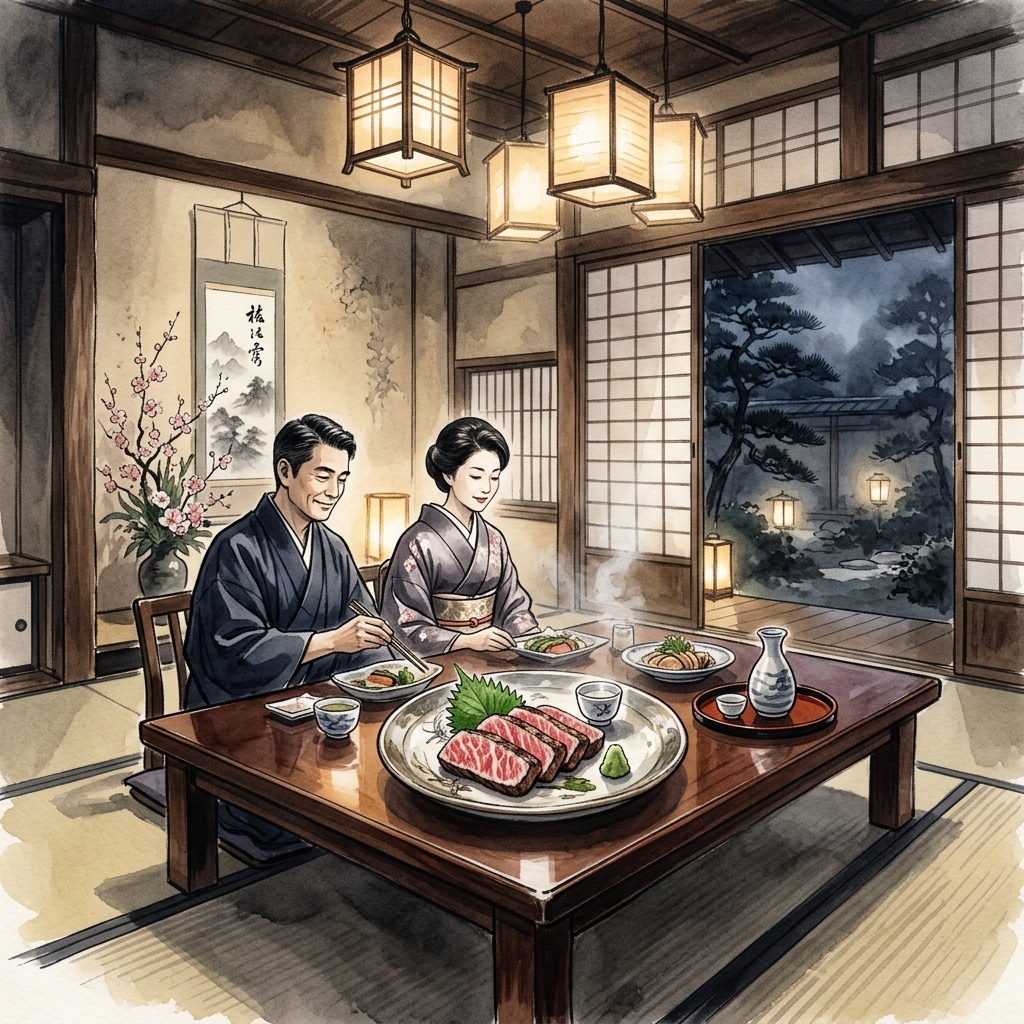
The Surge in Halal Wagyu Demand
The demand for authentic Japanese Wagyu in the Middle East and Southeast Asia has skyrocketed. Luxury hotels and restaurants in Dubai, Riyadh, and Kuala Lumpur require the highest grade of A5 Wagyu, but it must be strictly certified Halal.The Challenge of Halal Certification in Japan
Not all Wagyu is Halal. For Japanese beef to be certified Halal, it must meet extremely strict criteria: 1. Diet: The cattle must not be fed any animal by-products or alcohol-based feed (some traditional farms use beer or sake lees, which disqualifies the beef). 2. Slaughter Process: The slaughter must be performed by a certified Muslim slaughterman at an officially approved Halal facility in Japan. 3. Cross-Contamination: The facility must ensure complete separation from non-Halal meat processing. Currently, there are very few slaughterhouses in Japan (primarily in Kagoshima and Gunma) that hold internationally recognized Halal certifications (such as JAKIM or MUI).Securing Supply with Wagyu Ninja
Because the supply of certified Halal Wagyu is severely limited compared to conventional Wagyu, it is critical to secure forward contracts. Wagyu Ninja partners directly with Japan’s premier Halal-certified slaughterhouses. We provide full trace-ability, official Halal certificates, and coordinate specialized cold-chain air freight directly to the UAE, Saudi Arabia, and beyond.
Karen Hashimoto
Curator & Export Compliance Director · WAGYU NINJA
Karen sources directly from Japanese producers and handles export compliance for B2B buyers in 50+ countries. Based in Fukuoka, Japan. @konnichiwa.karen